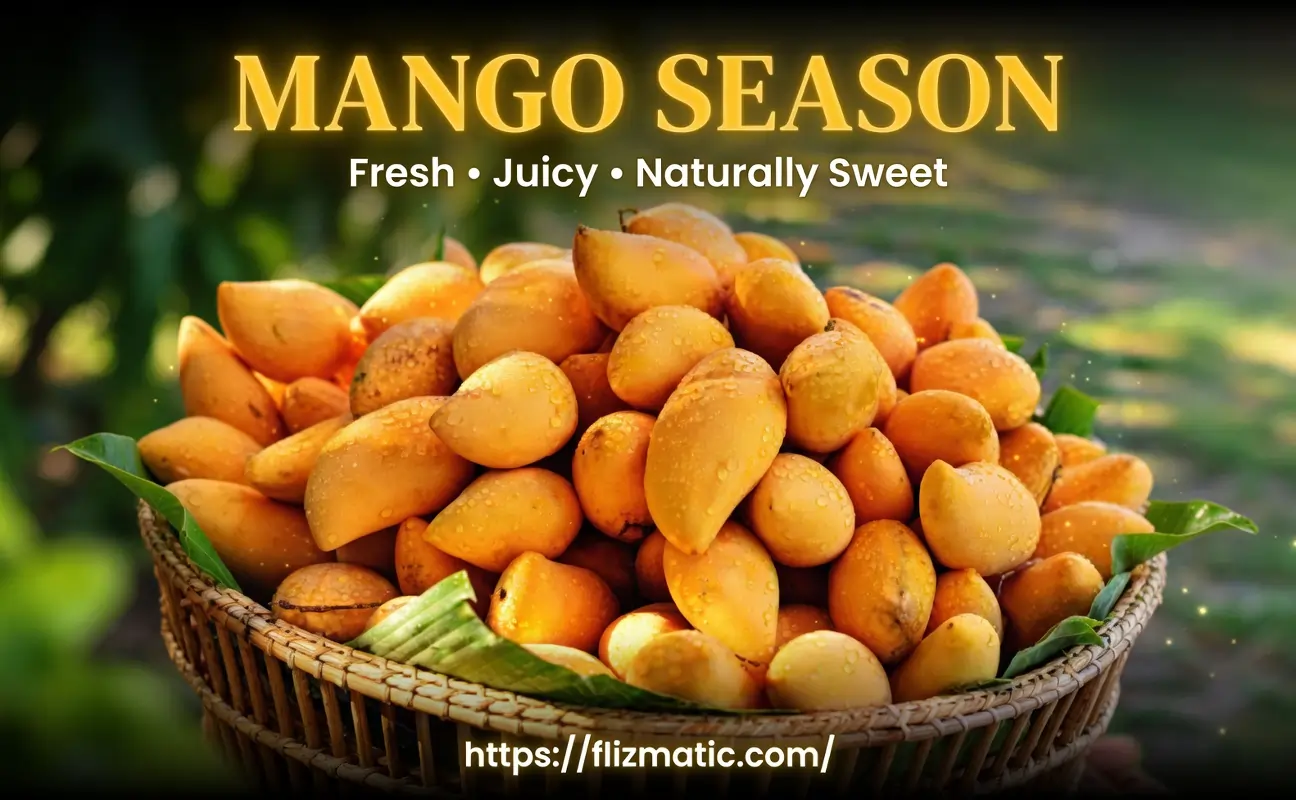
Mango Season: Your Complete Guide to Peak Ripeness Worldwide
A mango’s perfect moment is sweet, juicy, and unforgettable. But when is mango season? The answer changes based on where you live and which variety you love. Many people buy hard, tasteless fruit simply because they missed the natural window.
This guide maps out global mango seasons, ripeness signs, and storage secrets. You will never bite into a chalky mango again.
What Determines a Mango’s Natural Season?
Mango trees need dry weather to flower and warm days to ripen fruit. The shift from flower to harvest takes about 100 to 150 days. Rain during ripening ruins flavor and creates black spots. That is why when is mango season varies so much between countries.
Soil type also plays a role. Sandy soils heat up faster. This pushes mangoes to mature earlier. Clay soils hold more water and cool the roots. They delay the harvest by two to three weeks.
Global Mango Harvest Calendar (By Country)
Below is a detailed table showing peak mango months across major growing regions. Use this to plan your shopping trips.
| Country / Region | Peak Mango Months | Key Varieties |
|---|---|---|
| India | April – July | Alphonso, Kesar, Dasheri |
| Mexico | February – August | Ataulfo, Tommy Atkins |
| Thailand | March – June | Nam Dok Mai, Ok Rong |
| Florida, USA | May – July | Haden, Kent, Keitt |
| Brazil | September – December | Palmer, Tommy Atkins |
| Philippines | April – June | Carabao, Pico |
| Peru | November – January | Kent, Edward |
Knowing when is mango season in your area means checking local farm schedules. Imported fruit extends availability, but local harvests always taste better.
Early Season Mangoes: February to April
The first mangoes of the year appear in late winter. Mexico and Haiti lead the early crop. These mangoes are smaller and more fibrous. But they offer a bright, citrus-like tang.
The Ataulfo mango (also called honey mango) peaks in March. It stays buttery and non-fibrous. For anyone asking when is mango season for smoothies, this is your answer. Early season fruit works best for purees and salsas.
- Best use: Smoothies, green mango salad
- Shelf life: 3-5 days on the counter
- Color when ripe: Golden yellow (Ataulfo)
Peak Mango Season: May to July
This is the main event. From Florida to India, orchards burst with fruit. When is mango season at its absolute best? Mid-May through July. Sugars reach their highest levels. The flesh turns deep orange and almost melts.
Alphonso mangoes from India arrive in May. They smell like peaches and honey. Haden mangoes from Florida show up in June. They have red cheeks and a spicy-sweet taste. Kent mangoes follow in July. They stay green even when ripe but hide a fiberless inside.
During peak season, farmers markets sell mangoes by the case. Prices drop by half compared to early imports. This is the time to freeze extra fruit for winter.
Late Season Mangoes: August to October
Keitt mangoes dominate late summer. They grow large, sometimes over two pounds. When is mango season for grilling? August. Keitts hold their shape under heat. They do not turn mushy.
California grows limited late crops in September. Most of these go to local restaurants. By October, mango imports switch back to the Southern Hemisphere. Brazil and Peru start their spring harvest.
Late season mangoes taste milder but remain sweet. Use them in savory dishes with lime and chili.
Southern Hemisphere Mangoes: November to January
While North America waits for winter, Brazil delivers fresh mangoes. When is mango season in South America? It starts in November. Brazilian Tommy Atkins mangoes fill US grocery stores from December through February.
These mangoes are less fragrant but very durable. They ship well without bruising. For eating fresh, let them sit on the counter for three extra days. The flavor improves as starches convert to sugar.
Peru’s Kent mangoes arrive in January. They are the closest winter substitute to summer fruit. Still, nothing beats a local summer mango.
How to Tell a Mango Is Ripe (Without Cutting It)
Many people miss the perfect window because they rely on color alone. Color varies by variety. A green Keitt mango can be perfectly sweet. A red Haden might still be hard.
Use these three tests instead:
- The squeeze test: Gently press the skin near the stem. A ripe mango gives slightly, like a ripe avocado.
- The smell test: Smell the stem end. A fruity, peachy aroma means sugars have developed.
- The feel test: A ripe mango feels heavy for its size. Dry spots or wrinkles near the stem also signal ripeness.
Knowing when is mango season helps you buy at the right time. But even in season, not every fruit on the shelf is ready.
What Happens If You Eat a Mango Too Early?
An unripe mango tastes sour, chalky, and astringent. The sap contains high levels of resveratrol and citric acid. This can irritate your lips and tongue.
But early fruit is not wasted. Green mangoes make excellent pickles, chutneys, and Thai salads. Shred them thin. Toss with fish sauce, lime, sugar, and chili. When is mango season for green mango dishes? Any time before the fruit softens.
Never put an unripe mango in the refrigerator. Cold stops the ripening process permanently. Leave it on the counter at room temperature for 3 to 7 days.
Ripening Mangoes at Home: A Simple Method
You can speed up ripening with a paper bag. Place the mango inside with an apple or banana. These fruits release ethylene gas, a natural ripening agent.
- Time to ripen: 24 to 48 hours
- Check daily: Overripe mangoes turn mushy and ferment
- Do not use plastic bags: They trap moisture and cause rot
Once ripe, move the mango to the refrigerator. The cold stops further ripening for up to five days. This answers when is mango season for meal prep. Buy slightly underripe, ripen in batches, and store in the fridge.
Best Storage Practices for Peak Flavor
Cut mangoes should never sit at room temperature for more than two hours. Once sliced, bacteria grows quickly in the sweet flesh.
Refrigerate cut mango in a sealed container. It stays fresh for three days. For longer storage, freeze the pieces on a baking sheet. Then transfer to a freezer bag. Frozen mango lasts six months.
Do not freeze whole mangoes. The skin cracks, and the flesh turns stringy. Always peel and slice first.
When is mango season for freezing? Peak summer months. Stock up when prices are low. Use frozen mango in smoothies, sorbets, and sauces all year.
Common Mango Myths You Should Ignore
Several myths cause people to waste good fruit. Let’s clear them up.
Myth 1: Red mangoes are always ripe.
Truth: Color depends on sun exposure. A green mango can be ready. Always use the squeeze test.
Myth 2: Floating a mango in water tests ripeness.
Truth: This only checks density, not sugar content. Ripe and unripe mangoes both sink.
Myth 3: You cannot eat the skin.
Truth: The skin is edible but contains urushiol, the same compound in poison ivy. Sensitive people may react. Most prefer peeled mango.
Understanding when is mango season helps you avoid these myths. You will trust your senses, not old wives’ tales.
Top Mango Varieties and Their Windows
Different mango varieties shine at different times. Here is a quick guide.
- Alphonso: April–May (India). Rich, creamy, expensive.
- Ataulfo: March–July (Mexico). Small, yellow, fiberless.
- Haden: May–June (Florida). Red-green skin, spicy aroma.
- Kent: June–August (Florida/Peru). Green skin, orange flesh, no fibers.
- Keitt: August–October (California). Large, mild, good for grilling.
- Tommy Atkins: February–August (Mexico/Brazil). Tough skin, durable for shipping.
Ask your grocery manager when is mango season for your favorite variety. Some stores can order direct from farms.
Mango Nutrition by Season: Does It Change?
Yes. Peak season mangoes contain more vitamin C and beta-carotene. A study from the University of Florida showed that summer-harvested mangoes had 40% more antioxidants than winter imports.
The reason is simple. Fruit ripened on the tree develops more phytochemicals. Imported fruit is often picked early and gassed with ethylene. That triggers color change but not full nutrient development.
For maximum health benefits, eat local mangoes during when is mango season in your region. Your body will taste the difference too.
How Restaurants Know When to Buy Mangoes
Chefs do not guess. They build relationships with produce distributors who track harvests weekly. A good chef knows when is mango season in at least three countries. That ensures year-round supply for menus.
Many high-end restaurants switch mango varieties by month. In May, they feature Alphonso. In July, they use Kents. In winter, they switch to Peruvian fruit or frozen puree.
You can do the same at home. Keep a mango calendar on your fridge. Shop by variety, not by color.
6 Frequently Asked Questions About Mango Season
1. When is mango season in the United States?
The main US mango season runs May through July. Florida grows the largest crop. California harvests smaller amounts in September.
2. Can I find fresh mangoes in December?
Yes. Imported mangoes from Peru and Brazil arrive in November and last through January. Freshness varies. Look for firm fruit with no wrinkles.
3. When is mango season for the sweetest fruit?
Peak sweetness occurs from mid-May to late June. Alphonso and Kent varieties test highest in sugar content during these months.
4. Does mango season differ for green mangoes?
Green mangoes are simply unripe fruit. You can find them at the start of any local season. In Florida, early May offers hard green mangoes perfect for salads.
5. When is mango season in India?
India’s mango season runs April through July. Alphonso mangoes from Maharashtra peak in May. Dasheri mangoes from North India peak in June.
6. How long does mango season last in Mexico?
Mexico enjoys a long season from February through August. The Ataulfo variety starts in March. Tommy Atkins lasts through summer.
Your Next Step: Eat Mangoes on Their Schedule
Do not force a mango to fit your calendar. Work with nature instead. Mark your local when is mango season on your phone. Plan smoothie batches and salsa nights around peak weeks.