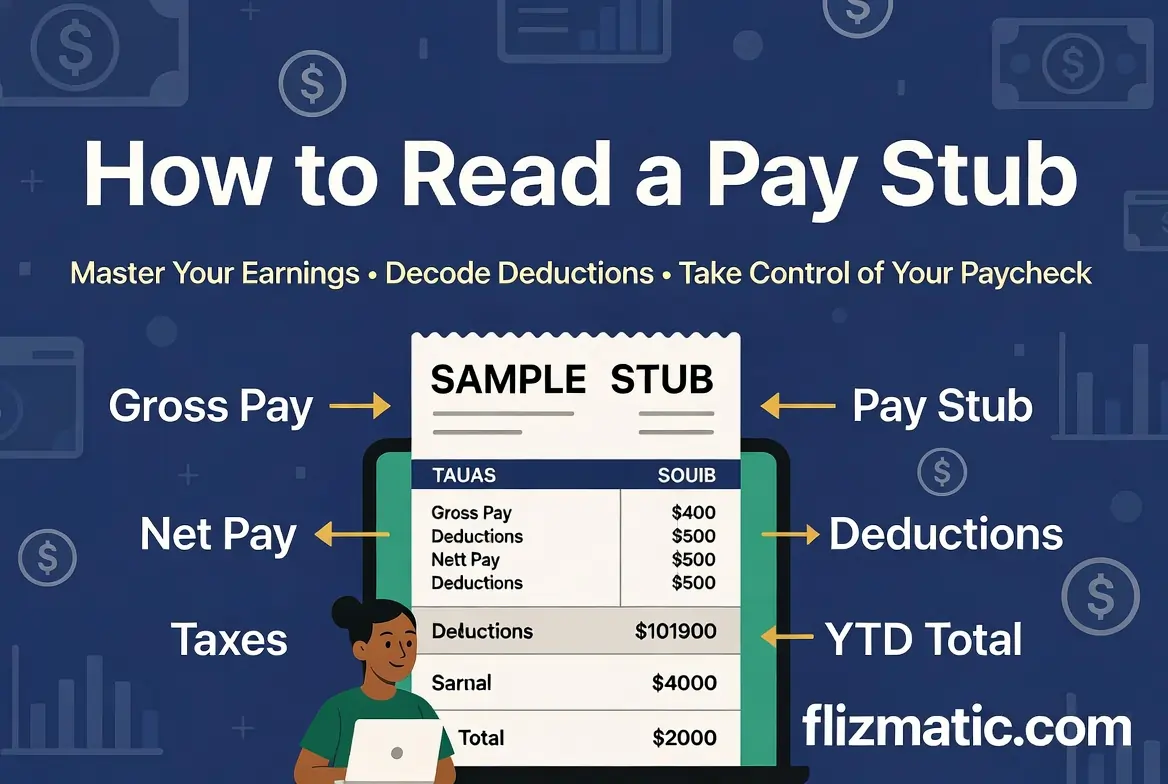
How to Read a Pay Stub: Your Complete Guide to Every Number
You work hard for your paycheck. But do you really know what those numbers mean? A pay stub holds the truth about your earnings and deductions. Learning how to read a pay stub gives you control over your money. You will catch payroll errors and understand your taxes.
What Is a Pay Stub and Why Does It Matter?
A pay stub is your detailed earnings record. It comes with every paycheck, whether physical or digital. This document shows your total earnings, taxes, and other deductions. Employers provide it to maintain transparency.
Understanding how to read a pay stub protects your income. You can spot mistakes before they hurt your budget. It also helps you file accurate tax returns. Many people ignore this tool. That is a costly mistake.
The Quick Guide to Reading Any Pay Stub
Before diving deep, know the three main sections. First, you have personal and company details. Second, you see your earnings and hours. Third, you find all deductions leading to your net pay. Learning how to read a pay stub starts with separating these blocks.
- Top Section: Your name, address, and last four SSN digits. Employer name and pay date.
- Middle Section: Gross wages, hourly rate, and hours worked (if hourly).
- Bottom Section: All taxes, benefits, and final net pay amount.
Your Personal Details: The Header Explained
Every pay stub begins with identifying information. Your full legal name should appear correctly. Your employer’s name and address are listed here. The pay period dates show which days you earned money for. The check date or direct deposit date is critical for your records.
When you learn how to read a pay stub, always verify your personal data first. A wrong name or address can cause tax issues. An incorrect Social Security number stops your credits. Check this section every single pay period.
Gross Pay: Your Total Earnings Before Cuts
Gross pay is your total earnings before any deductions. For salaried workers, this is your fixed amount per period. For hourly workers, multiply your hourly rate by hours worked. Overtime pay appears here as a separate line item.
This number is not what you take home. Many people get confused here. Understanding how to read a pay stub means knowing gross pay is just the starting line. Bonuses, commissions, and paid time off also add to this total. Always verify your gross pay matches your expected rate.
Net Pay: The Money That Hits Your Bank
Net pay is your take-home amount. This is what arrives in your bank account or on your physical check. After all taxes and deductions, net pay is always smaller than gross pay.
Example: Gross pay $2,000 – Total deductions $600 = Net pay $1,400.
Learning how to read a pay stub requires focusing on net pay for your budget. But do not ignore the deductions. They show where the other $600 went. Many people only look at net pay. That gives you half the picture.
Federal Income Tax: Your Largest Deduction
The federal government takes income tax from every paycheck. Your W-4 form determines how much is withheld. Claiming more allowances means less tax taken out. Claiming fewer means more tax withheld.
When you master how to read a pay stub, you can adjust your W-4 anytime. Too much withholding gives you a big refund but less cash now. Too little withholding means you owe money in April. Find the sweet spot for your life.
Social Security and Medicare Taxes (FICA)
FICA stands for Federal Insurance Contributions Act. This funds Social Security and Medicare. You pay 6.2% for Social Security on earnings up to a yearly limit. You pay 1.45% for Medicare on all your earnings. Your employer matches these amounts.
These are not optional. Understanding how to read a pay stub means recognizing these as non-negotiable lines. They pay for retirement and healthcare benefits later. High earners may pay an extra 0.9% Medicare tax. Check if this applies to you.
State and Local Taxes: Where You Live Matters
Most states collect their own income tax. Nine states have no state income tax at all. Your state tax rate depends on where you live and work. Some cities also charge a local tax.
Learning how to read a pay stub includes locating state and local deductions. If you moved recently, verify the correct state is listed. Remote workers sometimes pay tax in two states. That gets complicated quickly.
Pre-Tax Deductions: Lower Your Taxable Income
Pre-tax deductions come out before taxes are calculated. This is a powerful money move. Common pre-tax deductions include health insurance premiums, retirement plan contributions (401k), and health savings accounts (HSA).
These deductions lower your taxable gross pay. That means you pay less in federal and state taxes. Mastering how to read a pay stub helps you maximize these options. Every dollar you put in pre-tax saves you about 20-30 cents in taxes.
Post-Tax Deductions: What Comes Out After Taxes
Post-tax deductions happen after taxes are calculated. These include Roth 401k contributions, garnishments, and union dues. Disability insurance and life insurance often fall into this category.
You do not get a tax break on post-tax deductions. However, Roth accounts grow tax-free for withdrawal later. When you learn how to read a pay stub, you can decide which deductions serve you best. Mix pre-tax and post-tax for balance.
Year-to-Date (YTD) Numbers: The Big Picture View
YTD shows your totals since January 1. Every pay stub includes YTD columns for earnings, taxes, and deductions. This helps you track your progress toward annual limits. You can see if you are on pace for your savings goals.
Learning how to read a pay stub means watching YTD numbers closely. Social Security has a yearly wage cap. Once you hit it, that deduction stops. YTD also helps you estimate your tax refund or payment. Do not skip this section.
Hours and Rate Information for Hourly Workers
If you are hourly, your pay stub shows hours worked. Regular hours, overtime, and double time each have their own line. Your hourly rate appears next to the hours. Some companies show PTO hours used separately.
For hourly employees, how to read a pay stub starts with verifying hours. One missing hour per week costs you 50 hours a year. Compare your stub to your timesheet every single payday. Mistakes happen more often than you think.
Understanding Reimbursements and Adjustments
Reimbursements are not wages. They are payments for money you spent on work items. Mileage, travel meals, and supplies appear here. These are not taxed because they are not income.
Adjustments fix previous payroll errors. A positive adjustment adds money to you. A negative adjustment takes money back. Learning how to read a pay stub includes spotting adjustments. Question any adjustment you do not understand immediately.
| Section | What It Includes | Why It Matters |
|---|---|---|
| Header | Name, address, employer, pay date | Verifies your identity and pay period |
| Gross Pay | Hourly wages, salary, overtime, bonuses | Confirms you are paid correctly |
| Pre-Tax Deductions | Health insurance, 401k, HSA | Lowers your taxable income |
| Taxes | Federal, state, FICA, local | Funds government programs |
| Post-Tax Deductions | Roth 401k, garnishments, disability | Personal choices after tax |
| Net Pay | Final take-home amount | Money for your actual life |
| YTD Totals | All yearly accumulations | Tracks annual limits and progress |
How to Spot and Report Pay Stub Errors
Errors happen. Your employer is human. Common mistakes include wrong hours, incorrect tax withholding, and missing overtime. You might see a wrong name or Social Security number. You could find a deduction you did not authorize.
If you know how to read a pay stub, you catch these fast. Send an email to payroll immediately. Attach a copy of the stub. Circle the error in red. Ask for a corrected stub within one pay period. Federal law requires accurate pay records.
Digital Pay Stubs vs. Paper: What to Keep
Most companies use digital pay stubs now. You log into a portal to view and download them. Paper stubs are rare but still exist. Digital stubs are better for the environment and your storage.
Keep every pay stub for at least one year. Save them until you receive your W-2 and verify it matches. For major purchases like a house, save three months of stubs. Learning how to read a pay stub includes knowing what to keep and for how long.
Frequently Asked Questions About Pay Stubs
Q: Can I get a pay stub if I am paid in cash?
A: Yes. Even cash payments require a pay stub by law. Your employer must provide written documentation of your hours, rate, gross pay, and all deductions. If they refuse, they are breaking labor laws.
Q: How long should I keep old pay stubs?
A: Keep them for one year after receiving your W-2. Keep them for three years if you file an amended tax return. Keep them forever if they document pension credits or disability claims.
Q: What if my net pay is lower than minimum wage?
A: That is a serious problem. After required deductions, your net pay can drop below minimum wage. But excessive deductions that you choose (like 401k) cannot violate wage laws. Contact your state labor department for help.
Q: Can my employer take money from my pay stub without asking?
A: Only for taxes, court-ordered garnishments, and agreed-upon benefits. Anything else requires your written permission. Uniforms, breakage, or cash register shortages cannot be deducted without your consent.
Q: Why does my pay stub show a different tax rate than my friend?
A: Your W-4 allowances, filing status, and extra withholdings change your rate. Your friend may have children, a spouse who works, or different deductions. Compare your W-4 forms to understand the difference.
Q: How do I read a pay stub for a bonus check?
A: Bonus checks often use a higher withholding rate (22% flat federal). The gross pay shows your full bonus amount. Deductions follow the same categories. Your net pay may feel smaller than expected due to that flat rate.
Take Control of Your Pay Stub Today
You now have the complete guide to how to read a pay stub. Open your most recent stub right now. Go line by line using this article. Verify every number. Question every deduction you do not recognize.