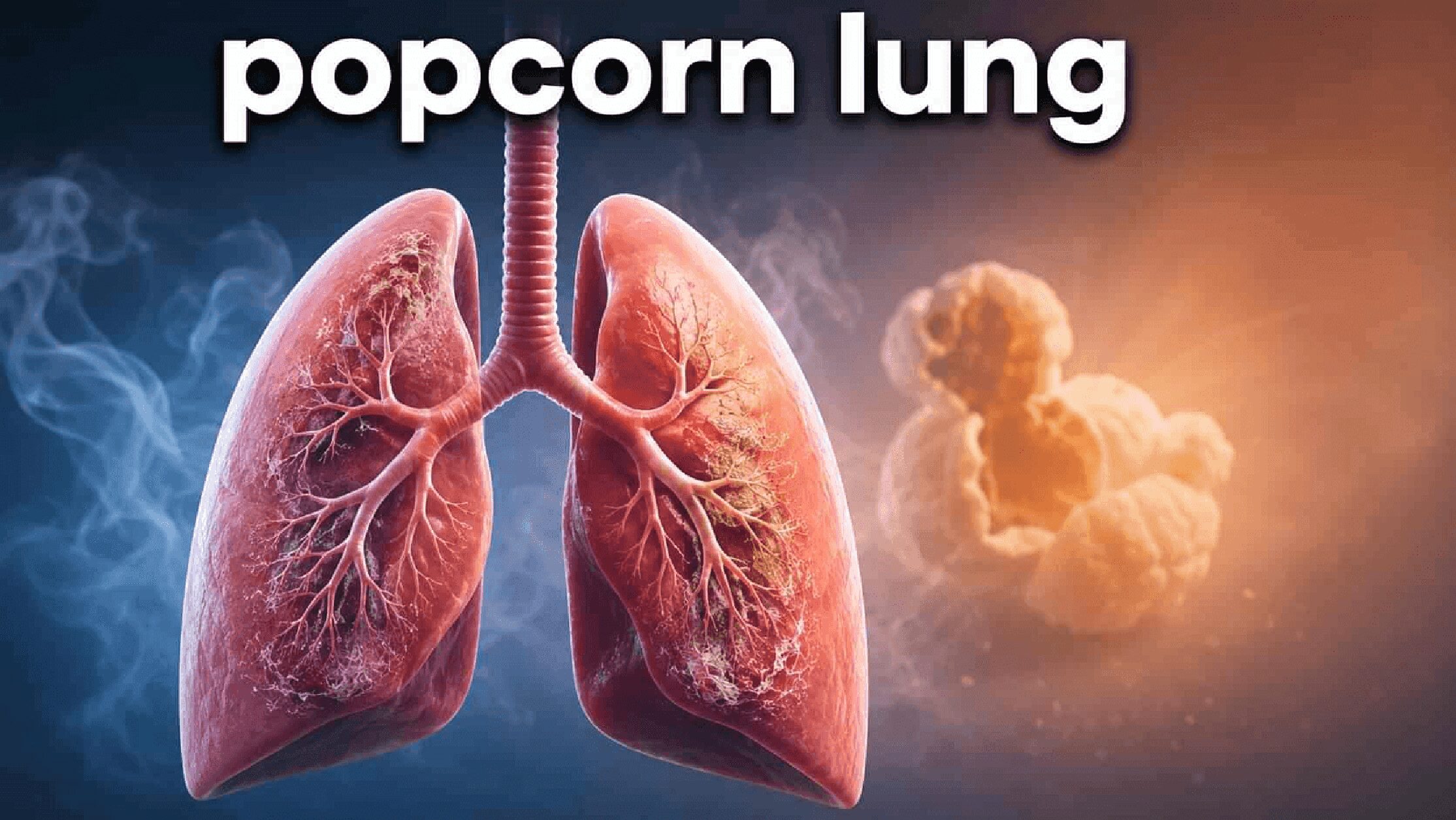
What Is Popcorn Lung? Key Symptoms, Causes & Facts
Medical Review Trust Signal: This pillar page is reviewed for medical accuracy and aligns with public health guidelines from the CDC, FDA, and the American Lung Association.
Struggling to catch your breath or dealing with a stubborn, chronic cough can be terrifying. Left unchecked, the condition nicknamed popcorn lung causes permanent, irreversible scarring in your airways. Understanding exactly what popcorn lung is and spotting its early warning signs empowers you to protect your respiratory health before severe damage takes hold.
What Is Popcorn Lung?
Doctors call popcorn lung bronchiolitis obliterans. This rare medical condition occurs when the tiny air sacs in your lungs become severely scarred and inflamed.
When these airways scar, they narrow and block air from entering your bloodstream. Your body loses its ability to get enough oxygen. The name comes from workers in microwave popcorn factories who developed this specific lung damage after breathing in chemical flavorings.
The Root Cause: How Diacetyl Damages Airways
Diacetyl is a chemical compound that gives food and drinks a rich, buttery flavor. Food manufacturers use it heavily in products like microwave popcorn, candy, and baked goods.
Eating diacetyl is completely safe for your digestive system. Inhaling it, however, is highly toxic. When you breathe in diacetyl vapors, the chemical directly attacks the delicate lining of your bronchioles. Your immune system tries to heal the injury, but it creates thick scar tissue that permanently blocks the air passages.
The Link Between Microwave Popcorn Factories
The term popcorn lung originated in the early 2000s. The National Institute for Occupational Safety and Health (NIOSH) investigated a microwave popcorn plant in Missouri.
Researchers found that factory workers breathing artificial butter flavoring had extremely high rates of severe lung disease. The CDC reported that these workers suffered from a fixed airway obstruction that looked strikingly similar to COPD. Following these vital findings, major popcorn manufacturers voluntarily removed diacetyl from their butter flavorings.
Vaping and E-Cigarettes: A Modern Risk for Popcorn Lung
The rise of electronic cigarettes introduced a new way for people to inhale diacetyl. Many flavored e-liquids contain this exact same chemical to create tastes like vanilla, maple, and butterscotch.
When a vaping device heats the liquid, it turns the flavorings into an inhalable aerosol. A landmark study by the Harvard T.H. Chan School of Public Health tested over 50 popular e-cigarette flavors. They found diacetyl in 39 of those samples. Vaping these flavored liquids directly exposes your lungs to the same dangerous chemical that sickened factory workers.
Recognizing the Early Symptoms of Popcorn Lung
Symptoms of this lung disease do not appear immediately after exposure. It often takes months or years of repeated inhalation for damage to become noticeable.
Watch for these critical warning signs:
- A persistent, dry cough that will not go away
- Unexplained shortness of breath, especially during exercise
- Wheezing or a whistling sound when you breathe
- Extreme fatigue and low energy levels
These symptoms closely match asthma or bronchitis. Many people mistakenly treat the cough with over-the-counter medicine while the underlying lung scarring worsens.
How Doctors Diagnose Popcorn Lung
Getting an accurate diagnosis requires specific medical testing. A standard chest X-ray often looks completely normal in early stages.
Pulmonologists use a test called spirometry to measure how much air you can forcefully exhale. Patients with this condition show a drastic drop in their exhalation speed. Doctors also use high-resolution CT scans to look for distinctive patterns of airway thickening and blockage. In some cases, they perform a surgical lung biopsy to confirm the presence of scarred bronchioles.
Detailed Stats: Popcorn Lung by the Numbers
Understanding the data highlights the serious nature of this respiratory illness. The table below outlines key statistics regarding exposure and diagnosis.
| Statistic Category | Detailed Data | Primary Source |
|---|---|---|
| Diacetyl in E-Cigs | Found in 39 out of 51 tested flavored e-cigarette liquids | Harvard T.H. Chan School of Public Health |
| Factory Worker Risk | Workers had 2.5 to 3 times higher rates of lung disease | Centers for Disease Control and Prevention (CDC) |
| Time to Onset | Symptoms typically develop after 2 to 8 years of exposure | National Institutes of Health (NIH) |
| Irreversibility | Lung scarring is permanent and cannot be reversed medically | American Lung Association |
| Flavoring Restriction | The FDA banned diacetyl in specifically regulated food products | U.S. Food and Drug Administration (FDA) |
Is Popcorn Lung Reversible?
Unfortunately, popcorn lung is irreversible. Once the tiny air sacs scar, no medication can undo the physical damage.
Treatment focuses entirely on slowing the progression of the disease and managing symptoms. Doctors often prescribe corticosteroids to reduce active inflammation in the lungs. In severe cases, patients require supplemental oxygen therapy to maintain healthy blood oxygen levels. When the lungs fail completely, a lung transplant becomes the only viable option for survival.
Key Differences Between Popcorn Lung and COPD
Doctors frequently confuse bronchiolitis obliterans with Chronic Obstructive Pulmonary Disease (COPD) because both block airflow. However, they are distinct medical conditions.
- Cause: COPD usually stems from long-term cigarette smoking. This condition comes from inhaling specific chemical fumes like diacetyl.
- Location of Damage: COPD damages the larger airways and lung tissue itself. This disease specifically targets the smallest airways (the bronchioles).
- Response to Treatment: COPD patients often improve significantly with bronchodilator inhalers. Patients with scarred bronchioles see very little improvement from standard asthma or COPD inhalers.
Notable Cases and Worker Safety History
The fight for safer working conditions brought this rare disease into the public eye. The timeline below highlights crucial moments in worker safety history.
| Year | Event & Biography Details | Impact on Worker Safety |
|---|---|---|
| 2000 | Missouri Plant Investigation: NIOSH examines eight former workers of a Gilster-Mary Lee popcorn plant in Jasper, Missouri. | Identified a cluster of fixed obstructive lung disease among young, otherwise healthy workers. |
| 2002 | Eric Peoples’ Legal Battle: Former microwave popcorn worker Eric Peoples wins a $20 million lawsuit against the manufacturer. | Forced food companies to take chemical inhalation risks seriously and established legal liability. |
| 2004 | Flavoring Industry Alert: OSHA and NIOSH issue a joint hazard alert specifically targeting diacetyl exposure. | Prompted factories nationwide to install better ventilation and provide respiratory protective equipment. |
| 2016 | E-Cigarette Warnings: Harvard researchers publish findings on diacetyl in vaping liquids. | Shifted the safety focus from factory workers to the general public using flavored e-cigarettes. |
Actionable Steps to Prevent Popcorn Lung
Prevention is the absolute best defense against this lung disease. You can take clear, proactive steps to keep your airways safe.
Avoid using flavored e-cigarettes or vaping products entirely. If you work in an environment that produces food flavorings, bakery goods, or chemical mixtures, demand proper safety equipment. Employers must provide high-quality respirators and ensure workspace ventilation meets safety standards. Read product labels carefully and avoid inhaling any artificial butter or caramel flavoring powders.
Frequently Asked Questions About Popcorn Lung
Can you get popcorn lung from eating microwave popcorn?
No, eating microwave popcorn does not cause this disease. Your digestive system safely processes diacetyl without harming your lungs. The danger only occurs when you inhale the chemical vapors directly into your respiratory system.
How long does it take to develop popcorn lung?
Development time varies based on exposure levels. Factory workers typically developed symptoms after two to eight years of constant daily exposure. For vapers, the timeline remains unknown, but medical professionals warn that high concentrations of diacetyl could cause damage much faster.
Is popcorn lung contagious?
No, bronchiolitis obliterans is not contagious at all. You cannot catch it from someone else, and you cannot pass it to a friend or family member. It is strictly caused by breathing in toxic chemical particles.
Does popcorn lung go away on its own?
No, the lung scarring does not go away on its own. The body cannot repair the thick scar tissue that blocks the tiny airways. Medical intervention is required to stop further scarring, but the existing damage is permanent.
Are there safe alternatives to diacetyl in e-liquids?
Many manufacturers replaced diacetyl with similar chemicals like 2,3-pentanedione. The CDC warns that these substitute chemicals possess an almost identical molecular structure and cause the exact same severe lung damage. The only truly safe choice is to avoid inhaling flavored vapors completely.
Can children develop this condition?
Yes, children and teenagers are highly vulnerable if they vape flavored e-cigarettes. Their lungs are still developing, making them even more sensitive to chemical damage. The American Lung Association strongly warns that youth vaping introduces a completely unnecessary risk of permanent lung scarring.
Take Action to Safeguard Your Health
Protecting your lungs requires smart, informed choices every single day. You now have the exact knowledge needed to avoid the hidden dangers of diacetyl and chemical flavorings.