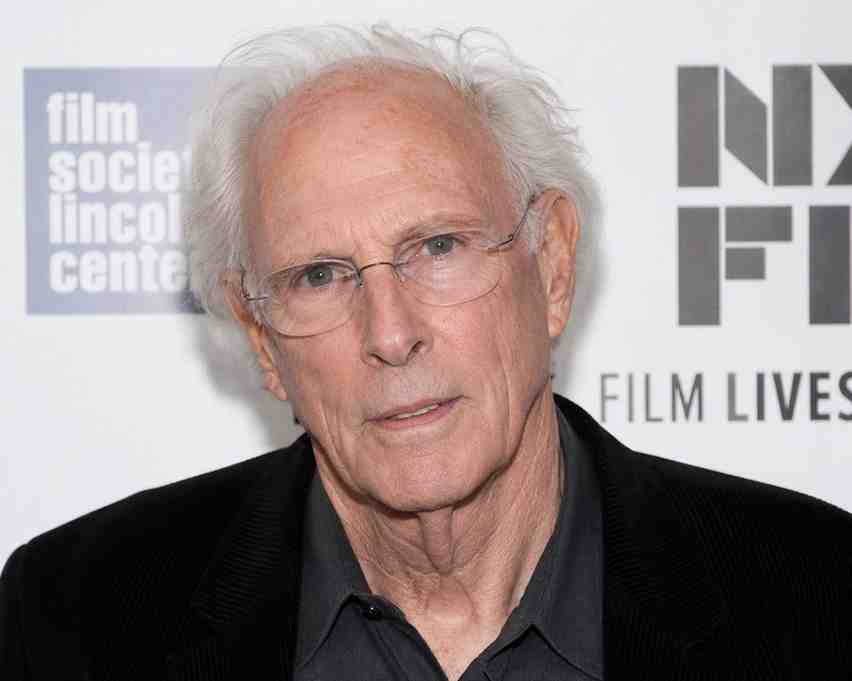
Bruce Dern: The Hollywood Villain Who Became an Icon
Bruce Dern never played it safe. He shot John Wayne in the back. He terrified audiences as a deranged blimp pilot. He brought quiet dignity to a forgetful old man on a road trip. For over six decades, Bruce Dern has been one of Hollywood’s most unpredictable and compelling actors.
The man with the wiry frame and unsettling stare built a career defying expectations. From his early days as a member of the legendary Actors Studio to his Oscar-nominated turn in Nebraska, Dern’s journey reveals an artist who chose complexity over comfort. He turned down roles that felt exploitative and embraced characters others feared to play. His career proves that the most memorable performances come from taking risks.
This pillar page explores Bruce Dern’s remarkable life and filmography. We’ll trace his path from Chicago privilege to Hollywood outsider. We’ll examine the roles that defined him and the relationships that sustained him. Whether you know him as the villain who killed the Duke or the ageing father searching for meaning, there’s always more to discover about Bruce Dern.
Table of Contents
- Who is Bruce Dern?
- Bruce Dern’s Early Life and Family Background
- How Did Bruce Dern Start His Acting Career?
- The 1960s: Bruce Dern’s Rise Through Television and Film
- Bruce Dern in the 1970s: From Villain to Leading Man
- What Was Bruce Dern’s Most Controversial Role?
- Bruce Dern’s Academy Award Nominations
- Bruce Dern and His Famous Family
- Bruce Dern’s Later Career and Resurgence
- Bruce Dern’s Net Worth and Legacy
- Frequently Asked Questions About Bruce Dern
Who Is Bruce Dern?
Bruce MacLeish Dern is an American actor whose career spans more than 60 years. Known for playing unstable villains and complex character roles, Dern earned Academy Award nominations for Coming Home (1978) and Nebraska (2013) . He won the Best Actor Award at the Cannes Film Festival for Nebraska and the Silver Bear for Best Actor at the Berlin International Film Festival .
Dern often portrays characters on the edge. His performances feel authentic because he brings personal experience to every role. He studied under Elia Kazan and Lee Strasberg at the Actors Studio, learning method acting techniques that shaped his approach to character work . This training gave him the tools to create memorable, sometimes terrifying, screen personas. Bruce Dern became the actor directors trusted to bring complexity to difficult roles.
Bruce Dern’s Early Life and Family Background
Bruce Dern was born on June 4, 1936, in Chicago, Illinois, into a family of significant political and social standing . His grandfather, George Dern, served as Governor of Utah and later as Secretary of War under President Franklin D. Roosevelt . His godfather was Adlai Stevenson II, the Governor of Illinois and two-time Democratic presidential nominee .
Dern was raised in the affluent Chicago suburb of Kenilworth, Illinois. . He attended New Trier High School, where he excelled as a track star. He dreamed of qualifying for the 1956 United States Olympic team in the 1500 metres . The young Bruce Dern was a serious athlete with Olympic ambitions.
He enrolled at the University of Pennsylvania but dropped out after two years . Rather than following the family path into law or politics, he pursued acting. He moved to New York City to study at the Actors Studio alongside legends like Marlon Brando and James Dean. This decision set Bruce Dern on a path that would lead to Hollywood stardom.
How Did Bruce Dern Start His Acting Career?
Bruce Dern’s first professional acting work came on the stage. He starred in the Philadelphia premiere of Samuel Beckett’s Waiting for Godot . This avant-garde production showcased his willingness to take artistic risks. He also performed on Broadway in Tennessee Williams’ Sweet Bird of Youth, sharing the stage with Paul Newman .
His film debut came in 1960 with an uncredited role in Elia Kazan’s Wild River . Kazan had been one of his teachers at the Actors Studio, and this connection gave Dern his first Hollywood opportunity. Television work followed quickly. He appeared in episodes of popular Western series and crime dramas throughout the early 1960s.
Alfred Hitchcock took notice of Bruce Dern. He cast him as a sailor in Marnie (1964) and later in Family Plot (1976), Hitchcock’s final film . The director reportedly told Dern, “Who would ever have believed after all these years that you would be my leading man?” . This early recognition from a master filmmaker helped establish Bruce Dern as an actor worth watching.
The 1960s: Bruce Dern’s Rise Through Television and Film
The 1960s brought Bruce Dern steady work in both television and film. He played villains and unstable characters across multiple genres. His collaboration with B-movie king Roger Corman proved especially fruitful. He appeared in The Wild Angels (1966), The St. Valentine’s Day Massacre (1967), and The Trip (1967) .
Dern also gained recognition for his work in Westerns. He played a murderous rustler in Hang ‘Em High (1968) opposite Clint Eastwood . He showed comedic timing as a gunfighter in the Western spoof Support Your Local Sheriff! (1969) . He also delivered a powerful performance in They Shoot Horses, Don’t They? (1969), a Depression-era drama starring Jane Fonda .
Bruce Dern’s typecasting as a villain began during this decade. His intensity made him perfect for unstable characters. However, this image sometimes frustrated him. He wanted to show more range. Despite these limitations, his work in the 1960s established him as a reliable character actor with genuine talent.
Bruce Dern in the 1970s: From Villain to Leading Man
The 1970s became Bruce Dern’s defining decade. He delivered iconic performances across multiple genres. The decade began with The Cowboys (1972), where he played Asa Watts, a cattle thief who kills John Wayne’s character . This role generated controversy. Wayne reportedly warned Dern, “America will hate you for this.” Dern replied, “Yeah, but they’ll love me in Berkeley” .
The same year, Bruce Dern played against type as Freeman Lowell in Silent Running. He portrayed a sensitive ecologist protecting the last forests in space. This role revealed his ability to convey vulnerability and idealism . Dern also starred alongside Jack Nicholson in The King of Marvin Gardens (1972), playing a charismatic con man .
In 1974, Dern took on the role of Tom Buchanan in The Great Gatsby. This performance earned him a Golden Globe nomination . He continued working with prestigious directors, appearing in Alfred Hitchcock’s Family Plot (1976) and Black Sunday (1977), where he played a vengeful Vietnam veteran who plots a terrorist attack at the Super Bowl .
Bruce Dern’s career peaked with Coming Home (1978). He played Captain Bob Hyde, a traumatised Marine whose wife falls for a paraplegic Vietnam veteran. His performance earned him an Academy Award nomination for Best Supporting Actor . Dern had finally proven he could do more than play villains.
What Was Bruce Dern’s Most Controversial Role?
Bruce Dern’s most controversial role came when he turned down a part in Bernardo Bertolucci’s 1900. The director offered him the role of a murderous fascist later played by Donald Sutherland. Dern refused because the character had to “rape a deaf girl and smash the kid’s head” . He simply did not see himself doing that on screen.
His role in The Cowboys also generated significant controversy. Killing John Wayne on screen was considered an act of cinematic treason by many fans. Dern received death threats after the film’s release . This controversy showed how seriously audiences took their Western heroes.
Dern’s performance in Tattoo (1981) sparked different criticism. He played an increasingly deranged tattoo artist who imprisons a fashion model. The film received poor reviews, and Dern earned a Razzie nomination for Worst Actor . Dern further damaged his reputation by claiming he and his co-star had actually had sex on camera during filming . This controversy set back his career during the 1980s.
Bruce Dern’s Academy Award Nominations
Bruce Dern has received two Academy Award nominations in his career. His first came in 1978 for Best Supporting Actor in Coming Home . He played a Marine struggling with PTSD and the breakdown of his marriage. The film earned multiple Oscar nominations, and Dern’s performance was widely praised.
His second nomination came in 2013 for Best Actor in Nebraska. Dern played Woody Grant, an ageing, sometimes confused man who believes he has won a million dollars. He undertakes a road trip to claim his prize. The role required Dern to show vulnerability, stubbornness, and longing. His performance won the Best Actor Award at the Cannes Film Festival .
Dern lost the Oscar to Matthew McConaughey for Dallas Buyers Club. However, the nomination itself represented a career resurgence. At age 77, Bruce Dern proved he could still deliver career-best work. His performance in Nebraska introduced him to a new generation of film fans.
Bruce Dern and His Famous Family
Bruce Dern comes from a distinguished political family, but he also built a famous acting dynasty. His grandfather George Dern was Secretary of War under President Franklin D. Roosevelt . His great-grandfather Andrew MacLeish founded the Carson, Pirie and Scott department stores in Chicago . His grand-uncle was the poet Archibald MacLeish .
Dern’s marriage to actress Diane Ladd produced daughter Laura Dern, who became one of Hollywood’s most acclaimed actors. Laura Dern has earned multiple Oscar nominations and won the Academy Award for Best Supporting Actress in Marriage Story (2019). Bruce Dern’s relationship with his daughter has been complicated, but both have spoken warmly of each other’s work.
On November 1, 2010, Bruce Dern, Diane Ladd, and Laura Dern all received stars on the Hollywood Walk of Fame in a single ceremony. This remains the only time a family has received their stars together . Bruce Dern’s legacy extends beyond his own work. His influence shaped American acting for generations.
Bruce Dern’s Later Career and Resurgence
Bruce Dern’s career slowed during the 1980s and 1990s. He appeared in smaller roles in films like The ‘Burbs (1989), Diggstown (1992), and Last Man Standing (1996). He never stopped working, but the leading roles dried up. However, he found strong supporting parts in films like Monster (2003), where he played one of the few supportive figures in the life of serial killer Aileen Wuornos .
His resurgence began with the HBO series Big Love (2006-2011). Dern played Frank Harlow, the domineering father of Bill Paxton’s character. This role earned him an Emmy nomination . The exposure led to more offers, including roles in Quentin Tarantino films like Django Unchained (2012) and The Hateful Eight (2015) .
His role in Once Upon a Time in Hollywood (2019) as George Spahn brought him to a new generation of film fans. Bruce Dern continues to work, appearing in several films scheduled for release . His career demonstrates that persistent talent eventually receives its due.
Bruce Dern’s Net Worth and Legacy
Bruce Dern’s net worth is estimated at approximately $10 million. This figure reflects his long career in Hollywood, including over 100 film appearances. While not among the wealthiest actors of his generation, Dern’s legacy is measured in artistic achievement rather than financial success.
Dern’s place in film history is secure. He represents a bridge between the classic Hollywood studio system and the New Hollywood era. He worked with Alfred Hitchcock, Elia Kazan, John Wayne, and Jack Nicholson. Later in his career, he collaborated with Quentin Tarantino and Alexander Payne. This range shows his versatility and staying power.
Bruce Dern’s lasting legacy lies in his willingness to take risks. He chose difficult characters over easy paychecks. He found humanity in villains and complexity in ordinary men. His work continues to inspire actors who want to challenge themselves and their audiences.
Frequently Asked Questions About Bruce Dern
What is Bruce Dern’s most famous role?
Bruce Dern’s most critically acclaimed role is Woody Grant in Nebraska (2013), which won him the Cannes Film Festival Award for Best Actor. He is also famous for playing Asa Watts in The Cowboys (1972), the character who kills John Wayne, and Captain Bob Hyde in Coming Home (1978), which earned him his first Oscar nomination.
Is Bruce Dern related to Laura Dern?
Bruce Dern is Laura Dern’s father. He was married to actress Diane Ladd, and their daughter Laura has become a celebrated actor in her own right. Laura Dern won an Academy Award for Marriage Story (2019) and is known for her roles in Jurassic Park, Inland Empire, and the HBO series Big Little Lies.
How many Oscar nominations does Bruce Dern have?
Bruce Dern has two Academy Award nominations. He was nominated for Best Supporting Actor for Coming Home (1978) and Best Actor for Nebraska (2013). He won the Best Actor Award at the Cannes Film Festival for Nebraska and the Silver Bear for Best Actor for That Championship Season (1982).
Why is Bruce Dern famous for killing John Wayne?
Bruce Dern played Asa Watts, a cattle thief who shoots John Wayne’s character in the back in The Cowboys (1972). This was considered shocking at the time, as the Duke rarely died on screen. Dern received death threats after the film’s release. He famously responded to Wayne’s warning that audiences would hate him by saying, “Yeah, but they’ll love me in Berkeley.”
What is Bruce Dern’s background and family history?
Bruce Dern comes from a prominent political family. His paternal grandfather, George Dern, served as Governor of Utah and Secretary of War under Franklin D. Roosevelt. His godfather was Adlai Stevenson II, a two-time Democratic presidential nominee. Dern grew up in Chicago and attended New Trier High School before dropping out of the University of Pennsylvania to pursue acting.
Where did Bruce Dern train as an actor?
Bruce Dern trained at the Actors Studio in New York City, studying under legendary teachers Lee Strasberg and Elia Kazan. He performed on stage in Waiting for Godot and Sweet Bird of Youth before moving to Hollywood. This training in method acting shaped his approach to character work throughout his career.
Conclusion
Bruce Dern has given audiences six decades of memorable performances. He transformed from a typecast villain into an Oscar-nominated character actor. He worked with the greatest directors of his era while maintaining artistic independence. His career is a testament to persistence, talent, and the courage to take risks.
Dern’s family background might have suggested a different life. He could have pursued law, politics, or business. Instead, he chose acting and built a legacy that extends beyond his own work. Through his daughter Laura Dern and his wide influence on character acting, his impact continues.
If you haven’t explored Bruce Dern’s filmography, start with Nebraska and Silent Running. These films showcase his incredible range. Watch Coming Home for his breakthrough dramatic performance. Then dive into his work with Hitchcock and Tarantino. Each role reveals another facet of this remarkable actor.
References
- Bruce Dern Biography – The Free Dictionary
- Bruce Dern – Wikipedia
- Bruce Dern Awards – Wikipedia
- Bruce Dern Profile – Mean Street Blog
- Bruce Dern – IMDb
- Bruce Dern – TCM Biography
- Bruce Dern Apple TV Profile